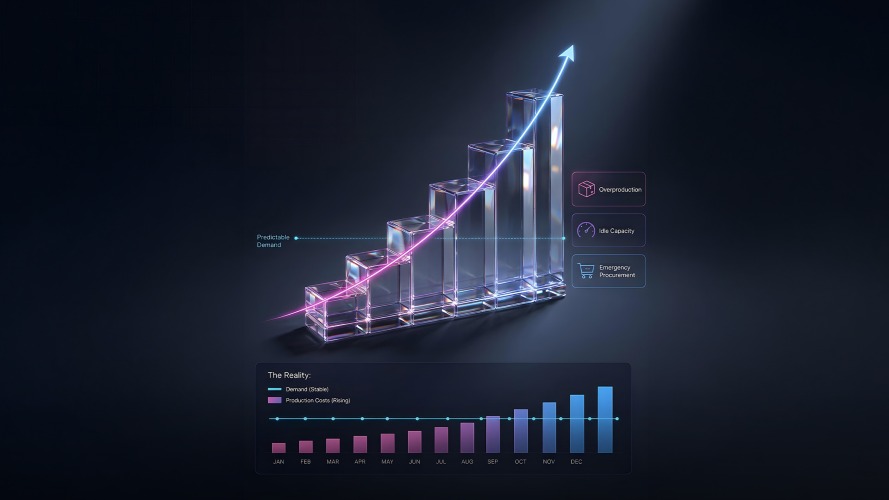
For many finance leaders, cost overruns rarely come unexpectedly. Yet the overruns themselves are typically identified only after they have affected financial performance.
At the end of every month, finance teams begin a familiar process. Data is gathered from multiple systems; reports are consolidated, spreadsheets are reviewed, and transactions are reconciled. The objective is to understand how the organization performed financially and whether spending remained within planned budgets.
However, by the time this process is completed, an important question often emerges: Why did costs exceed expectations?
The answer is usually hidden in weeks of operational activity that occurred long before finance had visibility into the issue.
How Small Variances Become Major Problems
Consider a manufacturing company managing multiple production lines. Procurement teams place orders, operations teams adjust schedules, suppliers revise pricing, and logistics costs fluctuate. Each decision may appear reasonable in isolation. Yet small increases across different functions can gradually push a project or business unit beyond its budget.
Because traditional reporting relies heavily on periodic reviews and month-end reconciliation, these cost increases often remain unnoticed until financial reports are finalized. What begins as a minor variance can evolve into a significant budget overrun before anyone has the opportunity to intervene.
This delayed visibility creates a major challenge for finance teams. Instead of preventing overspending, they spend valuable time explaining why it occurred.
The Cost of Delayed Financial Visibility
The problem is not a lack of financial expertise. In many cases, finance professionals have the skills and processes necessary to identify risks. The real challenge is access to timely information.
When data is stored across disconnected systems, spreadsheets, and departmental reports, finance teams are forced to work with historical information. Decisions are based on what happened weeks ago rather than what is happening today.
As businesses become more complex and market conditions change more rapidly, this approach creates increasing risk. Rising supplier costs, fluctuating demand, unexpected operational expenses, and supply chain disruptions can affect budgets at any time. Waiting until month-end to assess financial performance limits an organization's ability to respond effectively.
Moving Beyond Traditional Reporting
This is where modern cloud-based planning and analytics solutions are transforming financial management.
Rather than relying solely on static reports, organizations can access real-time dashboards that continuously monitor budgets, expenditures, forecasts, and operational metrics. Financial data becomes available as transactions occur, providing finance leaders with immediate insight into emerging trends and potential risks.
For example, if spending in a particular department begins to exceed projections, finance teams can identify the variance early and investigate the root cause. If material costs increase unexpectedly, stakeholders can evaluate alternative sourcing options before the impact becomes significant. If demand patterns shift, forecasts can be adjusted to reflect changing business conditions.
From Reactive to Proactive Decision-Making
The advantage is not simply faster reporting. It is the ability to make better decisions while there is still time to influence outcomes.
Real-time visibility also improves collaboration across the organization. Finance is no longer viewed as a function that reports historical results. Instead, it becomes an active strategic partner that helps business leaders understand financial implications and respond proactively to changing conditions.
In today's business environment, where margins are under constant pressure and market conditions can change rapidly, delayed financial visibility is no longer just an operational inconvenience. It is a competitive disadvantage.
The Future of Financial Control
Organizations that continue to rely on month-end reporting alone may find themselves repeatedly explaining cost overruns after they occur. Those that embrace real-time financial insights gain the ability to identify risks earlier, control spending more effectively, and make decisions with greater confidence.
Ultimately, the most valuable financial insight is not discovering where costs exceeded the budget last month. It is recognizing potential overruns as they develop and act before they affect business performance.